
| 产品名称 |
Recombinant Human TIM-4 (C-6His) |
| 英文名称 |
T-cell Immunoglobulin and Mucin Domain-containing Protein 4/Tim-4 |
| 纯度 |
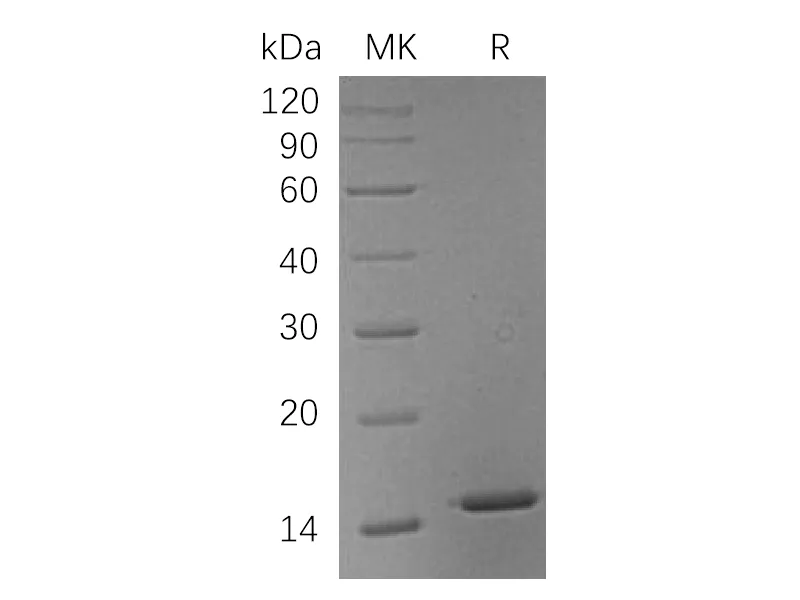
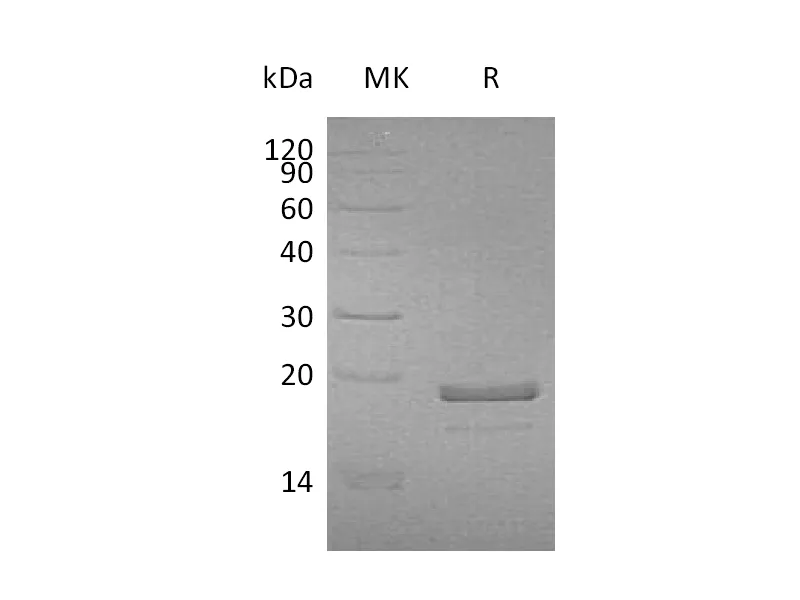
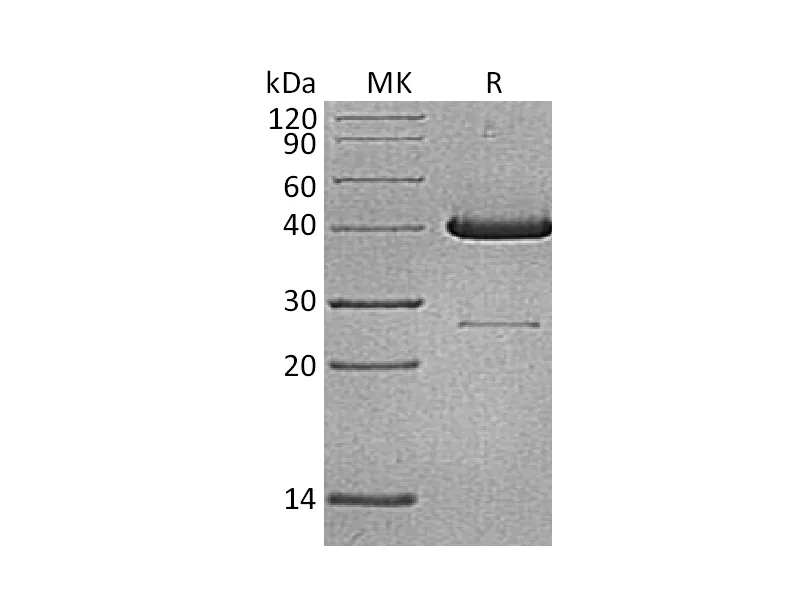
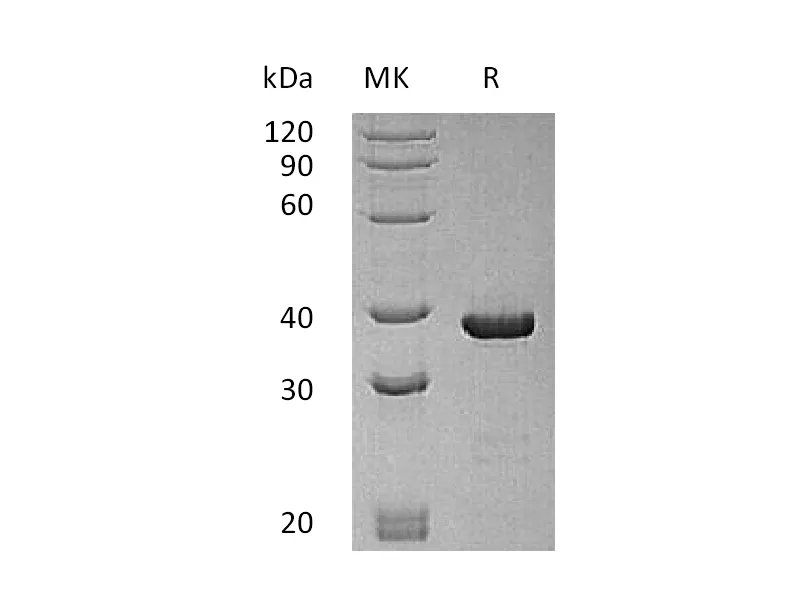
Greater than 95% as determined by reducing SDS-PAGE |
| 内毒素 |
<1 EU/µg as determined by LAL test. |
| 蛋白构建 |
Recombinant Human T-cell Immunoglobulin And Mucin Domain-containing Protein 4 is produced by our Mammalian expression system and the target gene encoding Glu25-Leu315 is expressed with a 6His tag at the C-terminus. |
| Accession |
AAH08988.1 |
| 表达宿主 |
Human Cells |
| 种属 |
Human |
| 预测分子量 |
32.3 KDa |
| 制剂 |
Lyophilized from a 0.2 μm filtered solution of PBS, pH 7.4. |
| 运输方式 |
The product is shipped at ambient temperature.Upon receipt, store it immediately at the temperature listed below. |
| 稳定性&储存 |
Store at ≤-70°C, stable for 6 months after receipt.Store at ≤-70°C, stable for 3 months under sterile conditions after opening. Please minimize freeze-thaw cycles. |
| 复溶 |
Always centrifuge tubes before opening.Do not mix by vortex or pipetting.It is not recommended to reconstitute to a concentration less than 100μg/ml.Dissolve the lyophilized protein in distilled water.Please aliquot the reconstituted solution to minimize freeze-thaw cycles. |
| 分子别名 |
| T-cell immunoglobulin and mucin domain-containing protein 4; TIMD-4; T-cell immunoglobulin mucin receptor 4; TIM-4; T-cell membrane protein 4; TIMD4; TIM4 |
| 背景介绍 |
| T-cell Immunoglobulin and Mucin Domain-containing Protein 4(TIM-4) belongs to the immunoglobulin superfamily, is a member of the TIM family of immune regulating proteins. TIMs are type I transmembrane proteins with one Ig-like V domain and one Ser/Thr-rich mucin domain. Structurally, TIM-4 is distinguished from other TIMs by the presence of an RGD motif in its Ig domain and the lack of a site for tyrosine phosphorylation in its cytoplasmic tail. The mucin domain in TIM-4 is larger than in TIM-1 or TIM-3. TIM-4 is expressed by macrophages and mature dendritic cells but not by lymphocytes. it is Involved in regulating T-cell proliferation and lymphotoxin signaling.The interaction of TIM-4 with TIM-1 induces costimulatory and hyperproliferative signals in T cells. TIM-4 binds specifically to TIM-1 which is also the cellular receptor for the hepatitis A virus, and has been implicated in the development of asthma. |
注意事项
本司产品仅用于科研,不用于临床诊断和治疗